

A 6 mg tablet identifies the tablet strength, not a universal dose or a guarantee that treatment is suitable for every inflammatory problem. By the end, you will understand how clinicians select the regimen, how to take it safely, when tapering matters, and which symptoms require prompt medical attention.
Key takeaways
- Deflazacort suppresses immune-driven inflammation through glucocorticoid receptor activity.
- NSAIDs mainly reduce prostaglandin production; deflazacort changes inflammatory gene activity.
- Never stop repeated or prolonged deflazacort treatment suddenly without prescriber guidance.
- Report infection symptoms, vision changes, severe mood changes, or unusual swelling promptly.
How deflazacort controls inflammation differently from NSAID painkillers
Deflazacort enters cells and binds glucocorticoid receptors, which alter gene activity in the nucleus. This reduces production of inflammatory cytokines, limits movement of immune cells into damaged tissue, and decreases swelling, redness and tissue irritation.
That broad corticosteroid anti-inflammatory effect also creates immune suppression: infection signs can be muted, and susceptibility to new or reactivated infections can rise.
| Feature | Deflazacort | Diclofenac or aceclofenac |
|---|---|---|
| Mechanism | Activates glucocorticoid receptors and changes inflammatory gene activity | Inhibits cyclooxygenase enzymes, reducing prostaglandin production |
| Main effect | Broadly reduces inflammation and modifies immune-cell activity | Reduces prostaglandin-driven pain, fever and local inflammation |
| Immune action | Produces clinically important immune suppression | Does not produce the same broad immune suppression |
| Typical concern | Infection masking, infection risk and steroid-related effects with ongoing use | Gastrointestinal, kidney, blood-pressure and cardiovascular risks |
This NSAID comparison matters because the medicines are not interchangeable. Deflazacort may control inflammation driven by an overactive immune response, while diclofenac or aceclofenac may suit pain and inflammation where prostaglandins are the main target. Deflazacort is not simply a stronger painkiller, and an NSAID does not replace its immune-modifying action.
A 6 mg tablet identifies the tablet strength, not a universal daily dose. The prescribed amount depends on the condition, severity, treatment duration, age and body weight; do not start, combine or change it without a clinician’s direction.
When a corticosteroid is considered—and when another approach comes first
A corticosteroid is considered when inflammation is severe, widespread, persistent, or immune-driven enough that local treatment or simpler medicines will not control it.
Deflazacort indications vary by country and product, but prescribers may consider it for autoimmune rheumatic disease, severe allergic or inflammatory disorders, selected inflammatory skin or joint disease, and immune-mediated kidney disease such as nephrotic syndrome.
A 6 mg tablet is only a strength, not a universal anti-inflammatory dose; the total daily amount depends on the diagnosis, severity, age, body weight and treatment plan.
- Use caution when infection is possible. Deflazacort can suppress immune responses, hide fever or other infection signs, and increase susceptibility to new or reactivated infections.
- Do not treat ordinary pain, fever, a minor sprain or uncomplicated mechanical pain with a corticosteroid by default. NSAID pain relief, physiotherapy, topical treatment or treatment of the underlying cause may come first.
- Do not assume a corticosteroid is the best starting option for mild, localized inflammation or an untreated infection.
- Repeated or prolonged courses require closer review because cataract, glaucoma or raised intraocular pressure can develop.
| Situation | Usual decision | Why it matters |
|---|---|---|
| Severe immune-mediated disease | Consider prescribed corticosteroid treatment | Inflammation may threaten organ function |
| Mild localized inflammation | Try local or non-steroid treatment first | Systemic steroid risks may outweigh benefit |
| Suspected untreated infection | Assess and treat infection first | Immunosuppression can worsen or conceal it |
How prescribers use a 6 mg tablet in a treatment regimen
A 6 mg tablet is a strength, not a standard dose for every inflammatory disorder. The prescribed deflazacort 6 mg dosage depends on the clinical decision behind treatment, not on the tablet strength alone.
- Diagnosis: Each condition has its own evidence, approved dosing information and treatment limits.
- Severity: More active or extensive disease can require a higher total daily amount than mild disease.
- Body weight and age: Children and weight-based regimens need individual calculation; older adults may need closer monitoring rather than an automatic reduction.
- Treatment goal: The dose for short-term control can differ from the dose used for maintenance, and the plan changes as symptoms respond.
For example, the U.S. label for Duchenne muscular dystrophy uses 0.9 mg/kg once daily. That example does not establish the correct dose for another inflammatory condition or prove approval in every country. Never calculate or change your dose from this example.
Once-daily dosing is convenient when the prescription calls for one daily amount. A prescriber may order divided doses when the diagnosis, symptom pattern or product information supports that schedule.
Take the tablet exactly as directed, and check the local brand’s instructions on whether to take with food or without food; do not assume all products have identical directions.
Swallow or split the tablet only if its approved product information permits it. If you miss a dose, follow the prescription instructions or ask a pharmacist rather than doubling the next dose.
How long treatment lasts and why stopping suddenly can be dangerous
Six milligrams does not determine whether treatment can stop abruptly. A clinician assesses the deflazacort treatment duration, total daily dose, dosing pattern, underlying disease and risk of relapse.
A short course at a low dose may not need a taper, while prolonged treatment or repeated courses require a planned reduction because the adrenal glands can produce less cortisol.
Stopping suddenly after significant systemic exposure can cause adrenal insufficiency and steroid-withdrawal symptoms, even if inflammation appears controlled. Seek urgent medical help for severe weakness, fainting, confusion, persistent vomiting or very low blood pressure. Contact the prescriber promptly for milder symptoms such as:
- unusual fatigue or muscle weakness
- dizziness when standing
- nausea, abdominal discomfort or loss of appetite
- returning inflammation, pain or other disease symptoms
Steroid tapering is individual. The prescriber may reduce the dose in stages and slow the reduction near the end, with adjustments for illness, surgery, infection or a flare. Do not copy another patient’s schedule or treat a 6 mg tablet as a tapering unit.
For a missed dose, take it when you remember unless the next dose is due soon; then skip it and resume the prescribed schedule. Do not double the dose.
If you miss more than one dose, or cannot follow a planned reduction, contact the prescriber or pharmacist rather than restarting, stopping or changing the amount yourself.
Side effects, warning signs and checks for ongoing or repeated treatment
Check blood glucose, blood pressure, weight and mood during repeated or prolonged treatment. Deflazacort side effects can include indigestion, increased appetite, insomnia and irritability; systemic exposure and treatment duration also drive osteoporosis and slowed growth in children.
| Finding | Why it matters | Action |
|---|---|---|
| Hyperglycaemia | Steroids can raise glucose and worsen diabetes control | Check glucose when symptoms or risk factors exist; review treatment with the prescriber |
| Hypertension and fluid retention | Rising blood pressure, ankle swelling or rapid weight gain can signal excessive fluid effects | Seek clinical review, especially with heart or kidney disease |
| Infection masking | Immunosuppression can hide fever or other signs while increasing susceptibility to new or reactivated infection | Report persistent cough, painful urination, wounds, fever or unusual weakness promptly |
| Severe mood change | Agitation, depression, confusion or suicidal thoughts require urgent attention | Contact a clinician urgently |
Check interactions before supplying it. Strong CYP3A4 inhibitors such as ketoconazole or clarithromycin can increase exposure; rifampicin, carbamazepine and phenytoin can reduce it. Diabetes medicines, anticoagulants and NSAIDs also warrant review. Avoid live vaccines during clinically significant immunosuppression; inactivated vaccines are safer but may produce a weaker response.
For Genial lifecare or any supplier, verify these points against the approved local product information:
- Strength, batch number, expiry date, intact seal and storage instructions
- Whether the tablet may be split or crushed, and the permitted food instructions
- Excipients, score line and disintegration documentation
- The prescribed indication and dose; never substitute 6 mg deflazacort milligram-for-milligram with prednisone or prednisolone without clinical oversight
Related product
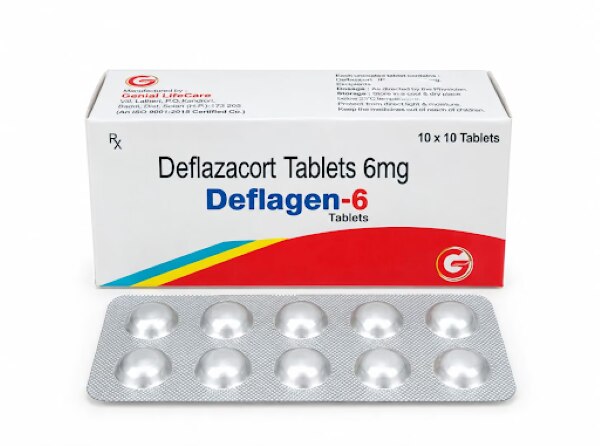
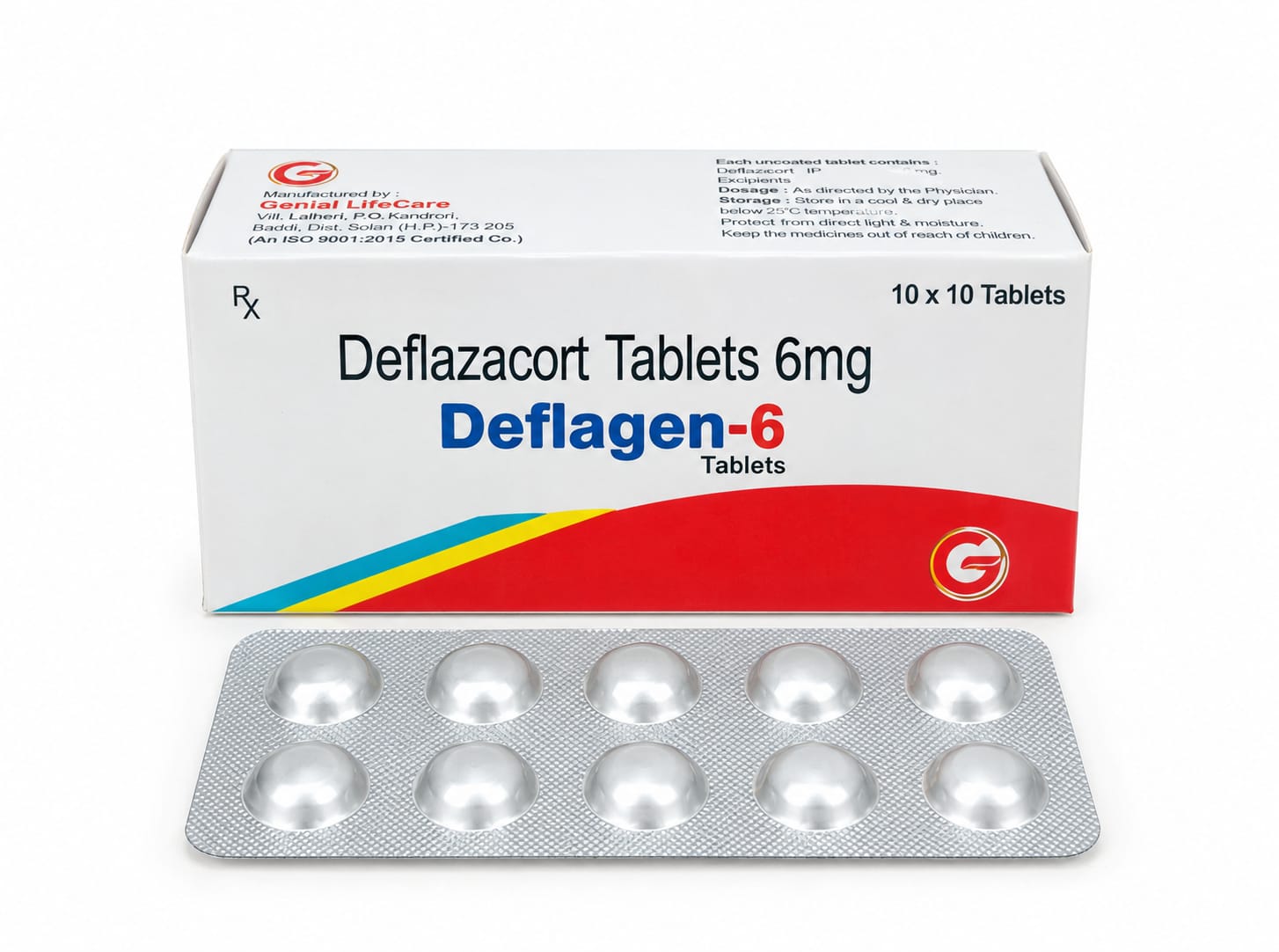 | allergic reactions DEFLAGEN-6 Tablets (Deflazacort 6mg Tablets) is a corticosteroid / steroid medicine. |
Frequently asked questions
How does deflazacort differ from NSAID painkillers?
Deflazacort is a corticosteroid that binds glucocorticoid receptors and changes gene activity, reducing inflammatory cytokines and immune-cell movement. NSAIDs mainly reduce prostaglandin production, so the medicines work through different pathways.
When is deflazacort considered for inflammatory conditions?
A prescriber may consider it when inflammation requires corticosteroid treatment or when another approach has not controlled the condition. The underlying diagnosis, infection risk, other medicines, and treatment goals determine whether it is appropriate.
How is a 6 mg deflazacort tablet used in a treatment regimen?
The prescriber selects the dose and schedule for the condition, severity, treatment response, and duration. Do not change the number of tablets or dosing times without medical instructions.
How long does deflazacort treatment last?
Treatment length ranges from a short course to longer or repeated treatment, depending on the condition and response. Longer use requires monitoring and a planned reduction when appropriate.
Why can stopping deflazacort suddenly be dangerous?
Repeated or prolonged corticosteroid use can suppress the body’s natural cortisol production. Sudden stopping can trigger withdrawal or adrenal insufficiency, so follow the prescriber’s tapering plan.