

Coenzyme Q10 is involved in mitochondrial energy production, but a mechanism does not automatically make a supplement a treatment or guarantee an energy benefit. By the end, you will know how to read the NUTROZYN-Q10 label, assess its dose and formulation, take it sensibly, and identify when medical advice is needed before use.
Key takeaways
- Check CoQ10 milligrams, serving size, form, and excipients on the label.
- Take lipid-soluble CoQ10 with a meal containing dietary fat.
- Judge effects against a defined goal and allow consistent use before reassessing.
- Ask a clinician about warfarin, chemotherapy, pregnancy, and blood-pressure medicines.
What Coenzyme Q10 does inside mitochondria
Coenzyme Q10 is a lipid-soluble benzoquinone concentrated in the inner mitochondrial membrane, where it carries electrons through the electron-transport chain. During oxidative phosphorylation, CoQ10 accepts electrons from complexes I and II and transfers them to complex III.
This electron flow helps drive proton movement across the inner mitochondrial membrane. The resulting proton gradient powers ATP synthase, which produces ATP—the cell’s immediately usable energy currency. CoQ10 therefore participates in energy conversion rather than supplying energy directly.
CoQ10 also exists in a reduced form called ubiquinol. Within the membrane, ubiquinol can act as an antioxidant by helping neutralise lipid-damaging reactive species and by supporting protection of membrane components from oxidation.
The heart and skeletal muscles are especially relevant because they consume large amounts of ATP. Cardiac muscle contracts continuously, while skeletal muscle repeatedly converts chemical energy into movement. Their mitochondria therefore have a substantial workload, making CoQ10’s electron-transfer role biologically important in these tissues.
This biology explains why products are described as supporting mitochondrial or cellular energy. It does not prove that taking CoQ10 treats heart disease, muscle disease, mitochondrial disorders, or fatigue. A supplement’s clinical effect depends on the person, dose, formulation, absorption, and condition being studied; normal mitochondrial function also involves many systems beyond CoQ10.
How to read the NUTROZYN-Q10 label and compare CoQ10 products
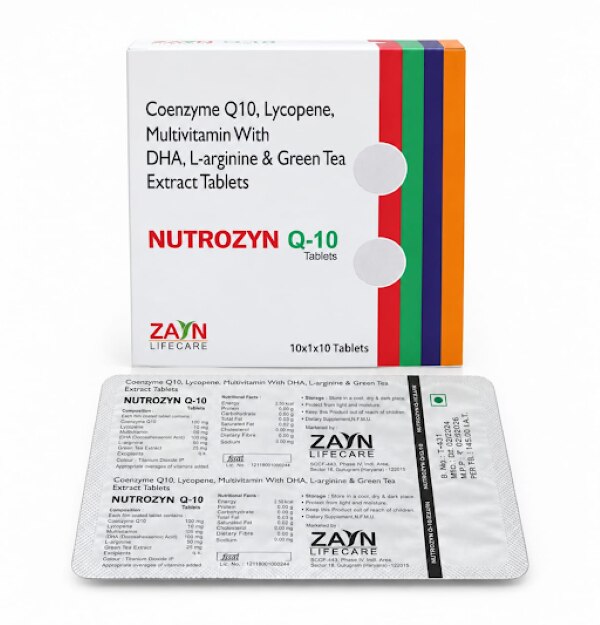
Find the CoQ10 dosage per tablet on the NUTROZYN-Q10 label, then identify whether it names ubiquinone or ubiquinol. Ubiquinol is the reduced form, but the form alone does not prove superior absorption or clinical value; raw material, dose, stability, food conditions, and formulation determine the comparison.
| Label item | Record side by side | Why it matters |
|---|---|---|
| CoQ10 | Milligrams per tablet and form | A named ingredient without a dose cannot establish meaningful intake |
| Supporting ingredients | Quantities of lycopene, DHA, L-arginine, each vitamin, and green tea extract | Presence alone does not show that an amount is nutritionally significant |
| Delivery | Tablet, oil-based system, solubilized preparation, emulsion, or other dispersion technology | The same nominal dose can produce different exposure |
| Quality | Assay, identity, degradation products, dosage-form uniformity, packaging, and stability through expiry | Declared mass may not equal consistent active content at the expiry date |
Compare the actual figures, not the ingredient list. CoQ10 is vulnerable to oxidation, light, heat, and poor dispersion, so packaging and storage records matter alongside the formula.
Plasma CoQ10 measures exposure in blood; it does not guarantee mitochondrial CoQ10 levels in every tissue. Ask formulation partners such as Genial lifecare for batch-specific documents covering:
- Certificate of analysis and assay method
- Degradation-product limits and uniformity results
- Packaging specification and expiry-date stability data
- Fed or fasted study conditions, sampling time, and whether results report total CoQ10 or the ubiquinol-to-total ratio
Related products
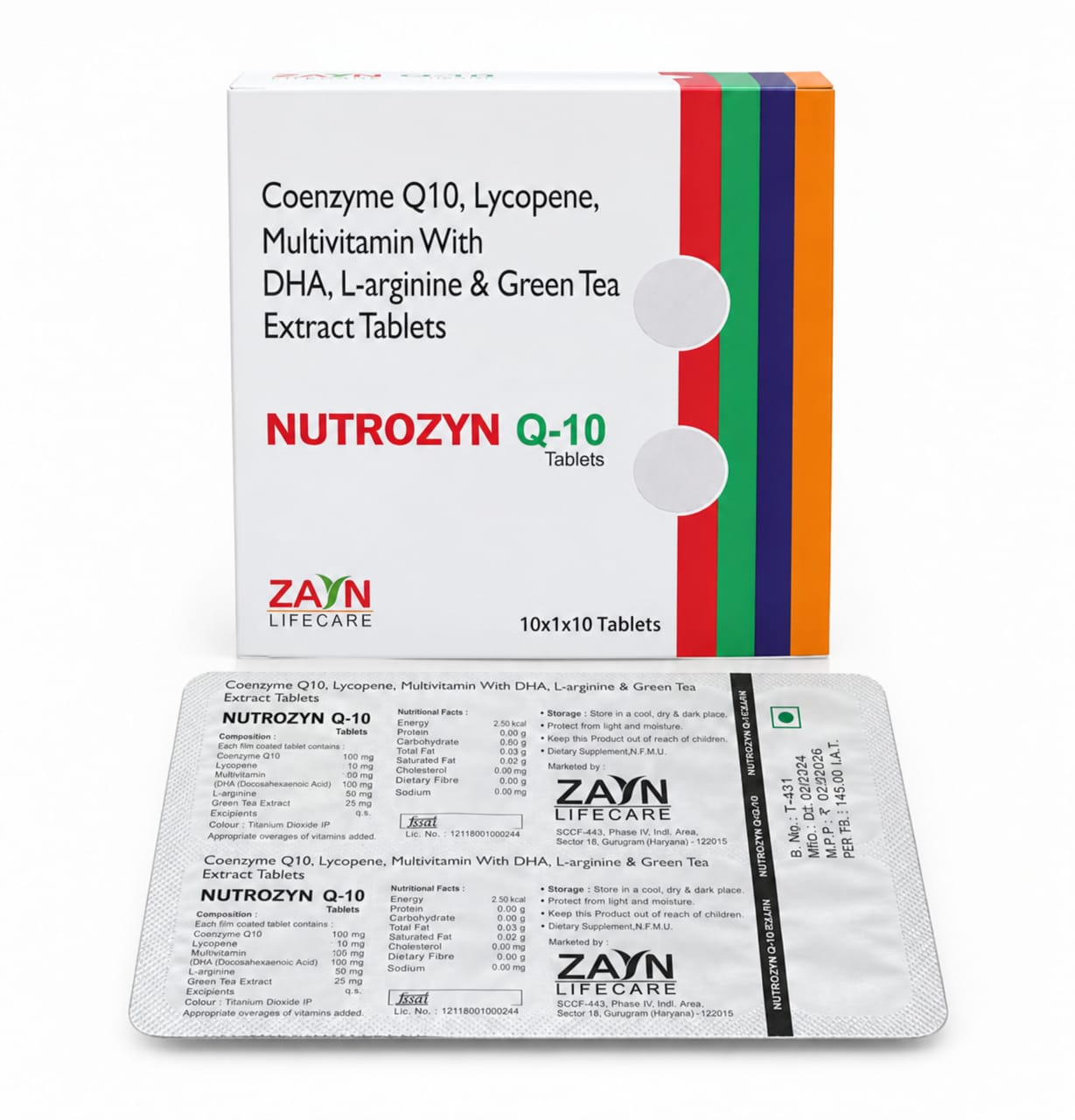 | Coenzyme Q10, Lycopene, Multivitamin With DHA, L-arginine & Green Tea Extract Tablets NUTROZYN Q-10 is a dietary antioxidant and multivitamin supplement. View product → |
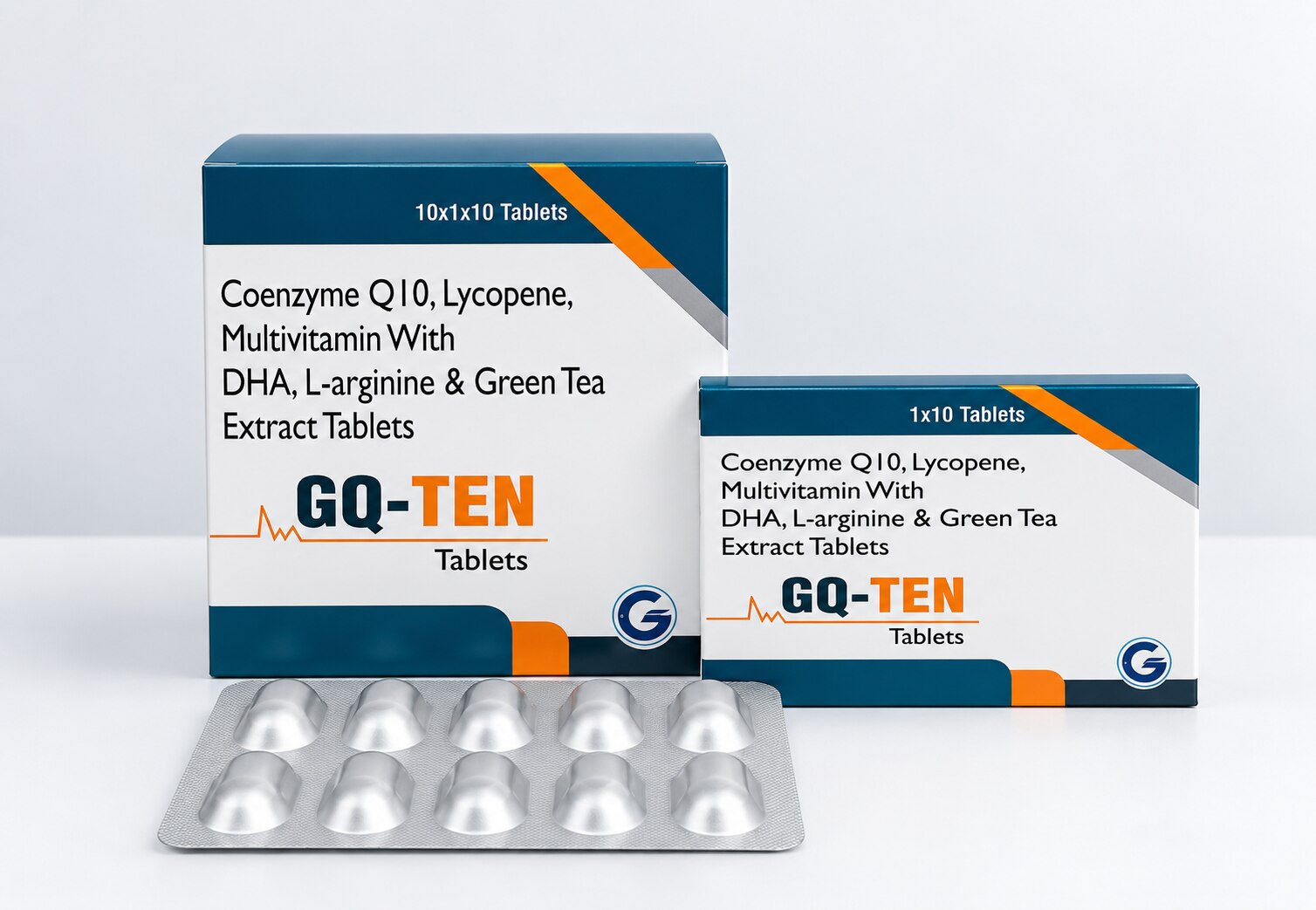 | Multivitamin and Nutritional Support Capsules GQ-TEN is a premium multi-nutrient supplement created for robust cellular support, heart health, and energy synthesis. View product → |
How to take it and when to judge an effect
Take NUTROZYN-Q10 at the same time each day, preferably with a fat-containing meal rather than on an empty stomach. CoQ10 is poorly water-soluble, so CoQ10 absorption generally improves with dietary fat.
1. Check the dosage form before comparing products. An ordinary tablet, oil-based softgel, solubilized preparation, emulsion, or another dispersion system can produce different exposure at the same nominal milligram dose. Do not assume equal absorption from equal label amounts.
2. If you take a missed dose, take it when remembered unless it is close to the next scheduled dose. Skip it when the next dose is near; do not double up.
3. Judge a perceived energy change only after a planned, multi-week period of consistent repeated dosing, not after one capsule. CoQ10 has a long terminal elimination phase, so there is no reliable universal timetable for noticing an effect. Record fatigue, sleep, activity, and other changes rather than attributing every fluctuation to the supplement.
Persistent fatigue needs clinical evaluation. Possible causes include anemia, thyroid disease, sleep disorders, medication effects, infection, and depression. A supplement cannot identify which cause is responsible.
What the clinical evidence can—and cannot—support
CoQ10 clinical evidence supports biochemical and mitochondrial functions, not a blanket claim of improved health or treatment. Studies commonly use about 100–300 mg per day, but no universally validated dose exists for general cellular health; dose depends on the indication, formulation, exposure, medicines, and endpoint studied.
| Indication | What the evidence shows | What it does not establish |
|---|---|---|
| Heart failure | Q-SYMBIO used 300 mg per day in selected patients with moderate-to-severe chronic heart failure and reported improved clinical outcomes | Treatment for healthy adults or every heart condition |
| Statin-associated muscle symptoms | Randomized findings are inconsistent for preventing or treating muscle symptoms | A reliable solution for statin myalgia |
| Migraine prevention and exercise performance | Some studies report possible benefits, but results and populations vary | Universal claims for migraine prevention, energy, or athletic performance |
Q-SYMBIO does not prove that NUTROZYN-Q10 treats heart disease. Do not present it as treatment for infertility, diabetes, chronic fatigue, neuropathy, or mitochondrial disease without evidence matching the product’s population, formulation, dose, and clinical endpoint. A “supports mitochondrial health” statement describes mechanism or biomarker evidence, not proven clinical treatment.
Plasma CoQ10 is an exposure marker, not proof that every tissue has improved mitochondrial function.
Safety checks before starting NUTROZYN-Q10
Get medical advice before starting NUTROZYN-Q10 if you take prescription medicines, are pregnant or breastfeeding, face chemotherapy or surgery, or have bleeding, blood-pressure, or glucose-control concerns. Adult tolerability data do not establish safety during pregnancy and breastfeeding.
1. If you use warfarin, discuss warfarin and CoQ10 with a clinician. Arrange INR monitoring when starting, stopping, or materially changing CoQ10 because its anticoagulant effect can decrease in some patients.
2. Request a medicine review if you take blood-pressure drugs or diabetes medicines. Obtain medical clearance before chemotherapy or an upcoming operation.
3. Nausea, diarrhea, abdominal discomfort, appetite loss, headache, and insomnia are reported adverse effects. Stop and seek advice for severe or persistent symptoms, hives, facial swelling, breathing difficulty, unusual bleeding, or major blood-pressure or glucose changes.
Do not assume all CoQ10 interactions apply identically to every product. Confirm the final NUTROZYN-Q10 formula and current clinical guidance with a clinician or pharmacist before use.
Frequently asked questions
What does Coenzyme Q10 do inside mitochondria?
CoQ10 carries electrons from complexes I and II to complex III in the inner mitochondrial membrane during oxidative phosphorylation.
How should you compare NUTROZYN-Q10 with other CoQ10 products?
Compare the CoQ10 amount per serving, serving size, ubiquinone or ubiquinol form, added ingredients, expiry date, batch number, and storage instructions.
How should you take NUTROZYN-Q10 and when should you judge an effect?
Follow the product label and take lipid-soluble CoQ10 with a meal containing fat. Track your defined goal consistently before deciding whether it helps.
What can clinical evidence support for CoQ10?
Evidence supports specific, limited uses in some conditions, but it does not establish CoQ10 as a universal treatment or replacement for prescribed care.
What safety checks should you complete before starting NUTROZYN-Q10?
Review warfarin, blood-pressure medicines, diabetes medicines, and cancer treatment with a clinician, and seek advice during pregnancy, breastfeeding, or before surgery.
Related product
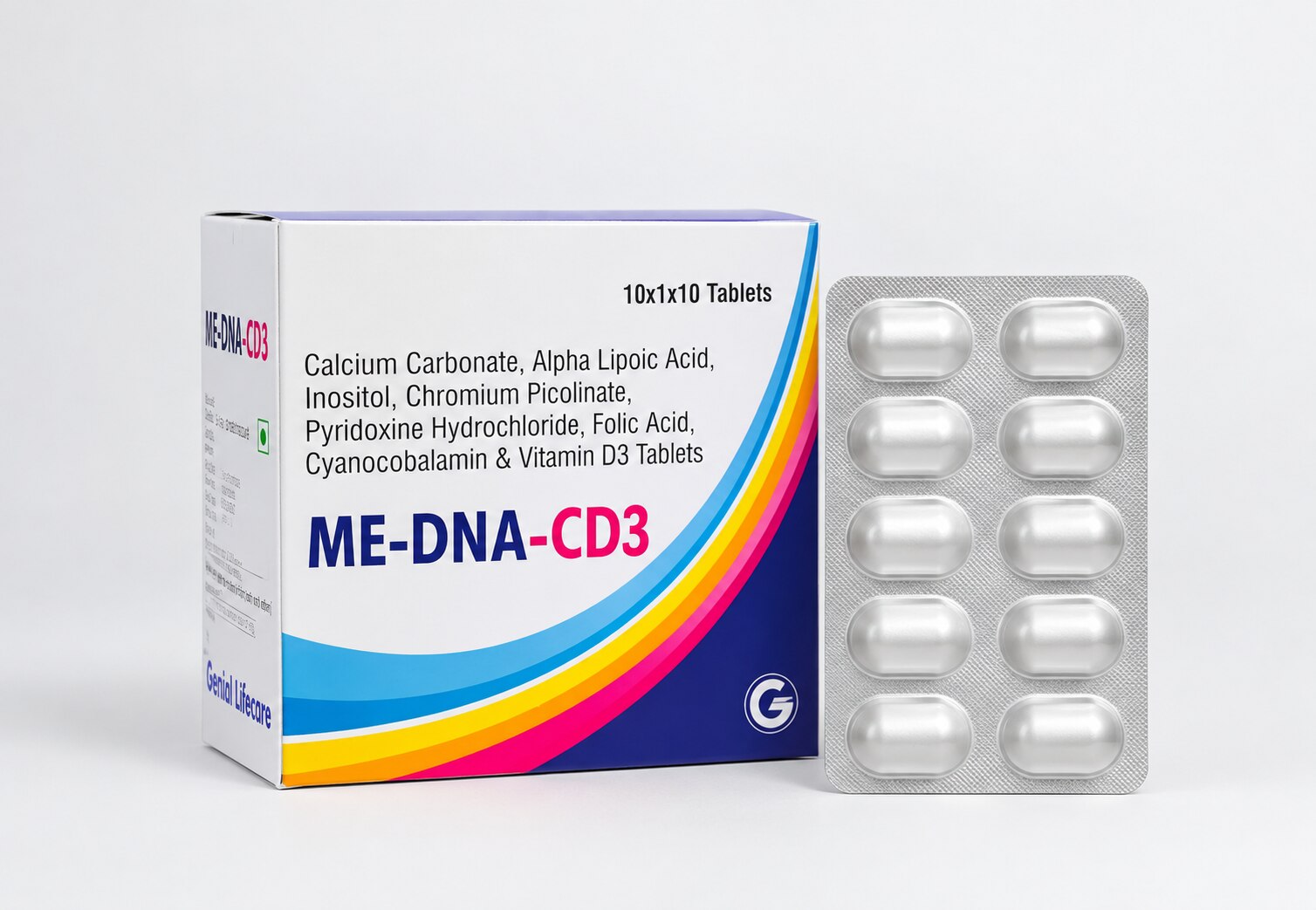 | Nutritional Supplement Tablets ME-DNA-CD3 is a comprehensive nutritional tablet formulation engineered to support bone mineral density, nerve function, and overall metabolic... View product → |