

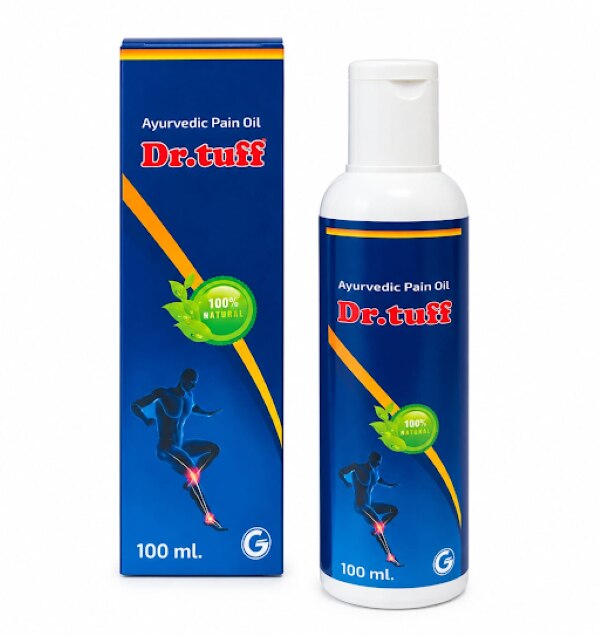
A product name and a claim of natural ingredients do not tell you what an oil contains, how it should be applied, or which users should avoid it. By the end, you will know which formulation, safety, label, regulatory, storage and quality details to verify before using or stocking DR.TUFF.
Key takeaways
- Do not assume botanical ingredients without the finished pack’s ingredient list.
- Confirm application instructions, contraindications and intended use before recommending DR.TUFF.
- Compare active ingredients, evidence, risks and dosage forms—not just product claims.
- Request licence, batch, stability and storage documents before stocking the product.
What the Available Information Reveals About the DR.TUFF Formulation
The available information does not disclose the complete DR.TUFF formulation. You cannot confirm the botanical ingredients, plant parts, extraction method, oil quantities, concentration, excipients, fragrance, preservatives or total fill volume. A product description that refers to botanical ingredients is not a substitute for the ingredient list printed on the finished pack.
The wording supports only a broad product description: an external Ayurvedic oil intended for application to the body. It does not establish whether DR.TUFF is a medicated oil, massage oil, liniment, roll-on or another topical preparation.
That dosage form clarification matters because the container, directions, permitted claims and applicable regulatory requirements can differ between these categories.
Do not infer that the product is a drug, cosmetic or nutraceutical from the name alone. In India, the category depends on the active ingredients, dosage form, strength, route and intended claim. An Ayurvedic oil claim also needs to be supported by the product’s label and manufacturing permissions; “branded” wording does not remove those requirements.
Before treating the product identity as confirmed, obtain:
- The full quantitative composition, including botanical names, plant parts, extract or oil amounts and any excipients.
- The stated dosage form, route of use, net volume and intended users.
- The label claim and regulatory classification, including whether it is presented as an Ayurvedic medicine, cosmetic or another topical product.
- The batch-specific label or technical document identifying strength, directions and product category.
Until those details are available, the DR.TUFF formulation can be described only in general terms, not as a verified composition or confirmed therapeutic product.
Application Instructions and Safety Questions to Resolve Before Use
Before applying the oil, confirm the topical application instructions on the finished pack. The label should state the amount, body area, frequency, massage method, contact time, and whether to wash it off. It should also say whether heat, tight bandaging, or a dressing is prohibited.
- Check that the product is for external use and identify its intended users. Ask a pharmacist or clinician before use on a child, during pregnancy, on sensitive skin, or alongside treatment for a skin condition.
- Perform a patch test exactly as the label directs before wider application. Do not continue if the test area develops redness, itching, burning, swelling, blistering, or another reaction.
- Follow broken skin precautions: do not apply to cuts, abrasions, ulcers, infected areas, or freshly shaved skin unless a healthcare professional specifically approves it.
- Keep the oil away from the eyes, mouth, nostrils, and other mucous membranes. Wash your hands after application, unless your hands are the treatment site.
- Stop use if pain worsens, skin irritation persists, a rash spreads, or swelling or blistering appears. Seek urgent medical help for facial swelling, breathing difficulty, or a severe allergic reaction.
- Do not use repeated applications to mask unexplained, severe, or persistent pain. Arrange medical assessment when pain follows major injury or comes with fever, weakness, numbness, or loss of movement.
A vague direction such as “apply as needed” leaves dose and exposure unclear. Resolve these questions before use rather than estimating from the oil’s texture or scent.
How to Compare DR.TUFF With Other Pain-Relief Options
An external oil cannot be compared fairly until you confirm its active ingredients, concentration, application amount and intended use. Without those details, treat it as an unverified topical preparation rather than assuming it matches a medicine with established dosing.
| Option | What it offers | Main limitation or risk |
|---|---|---|
| External oil | Local application and possible massage benefit | Effectiveness depends on the undisclosed formula; do not apply to broken skin until the label permits it |
| Topical diclofenac gel | A measured topical NSAID for some local muscle and joint pain | Avoid duplicate NSAID use and follow label limits; absorption and skin reactions still matter |
| Oral NSAID | Systemic pain and inflammation relief | Oral NSAID risks include stomach bleeding, kidney injury, raised blood pressure and drug interactions |
| Counterirritant | Menthol, camphor or capsaicin can create cooling, warming or burning sensations | The sensation does not prove tissue healing; avoid eyes, damaged skin and excessive heat |
| Hot or cold pack | Drug-free support for comfort and swelling control | Protect skin with a cloth and limit exposure; heat can worsen fresh swelling |
| Massage oil | Reduces friction during massage | Lubrication is not the same as pain treatment |
| Professional assessment | Identifies fracture, tendon injury, infection or nerve involvement | It takes time, but delaying care can prolong a serious injury |
Use a cold pack after a fresh injury when swelling is prominent, and consider gentle heat later for stiffness. Arrange a sprain medical assessment for deformity, inability to bear weight, severe swelling, numbness, an open wound or pain that is worsening or not settling.
Label, Regulatory and Storage Checks for the Finished Pack
The front and back labels must identify the product as an oil and state its route of use. Check the product name, dosage form, active ingredients or botanicals with quantities, net volume, manufacturer, manufacturing licence details, batch number, manufacturing date and expiry date.
If the formulation is not disclosed, the pack cannot confirm what the oil contains.
| Check | What it establishes | Failure response |
|---|---|---|
| Product category and claims | Drug status, or FSSAI nutraceutical status, depends on ingredients, strength, route and claims—not “branded” or “generic” wording | Request the applicable licence and verify that disease-treatment claims match the category |
| Schedule marking | Schedule H, H1 or X status controls prescription supply and records; H1 sale records are retained for three years, while Schedule X controls are stricter | Do not stock or sell it through ordinary channels without the required controls |
| Storage statement | The labelled temperature, light and humidity conditions define acceptable handling | Reject packs with missing instructions or investigate every documented excursion |
| Seal and container | An intact cap, seal, leak-free bottle, readable print and consistent fill protect identity and usability | Quarantine leakage, tampering, swelling, severe separation or illegible labels |
The external-use warning must be prominent, along with directions, contraindications and contact precautions. Do not infer a safe shelf life from the expiry date alone: it should be supported by stability data in the marketed bottle, cap and closure system.
For cold-chain packs, require transport records, excursion duration, packaging qualification and a documented disposition decision; a warehouse temperature log alone proves little.
What Healthcare Businesses Should Request Before Stocking DR.TUFF
Before placing an order, request the approved formula, manufacturing route, finished-product specification and proposed container-closure details. The pack description alone cannot confirm the oil’s composition, fill volume, shelf life or legal product category.
Request these records and controls:
- A batch-specific certificate of analysis showing test methods, specifications, sampling plan, analyst approval, actual results rather than only “pass,” and laboratory qualification.
- Stability data for the proposed market container, including long-term and accelerated studies, storage conditions, test intervals and the assigned expiry date. Accelerated data does not replace long-term evidence.
- Evidence of a WHO GMP quality system covering sanitation, equipment, validation, documentation, complaints, recalls, self-inspection and data integrity. A passing end-product test cannot prove the entire batch history is controlled.
- A pharmacovigilance procedure covering adverse-event intake, medical assessment, required reporting, signal review, corrective action and recall escalation.
- For third-party manufacturing, a contract identifying who holds each licence and who handles manufacture, testing, batch records, release, complaints and recalls.
| Commercial term | What to confirm in writing | Why it matters |
|---|---|---|
| Territory and minimums | Exclusive area, minimum purchase and termination triggers | Prevents stock obligations you cannot meet |
| Returns and recall | Expired-stock returns, counterfeit handling and recall costs | Defines financial and safety responsibility |
| Promotion and safety | Claim approval, adverse-event forwarding and response times | Franchise activity does not transfer marketing-authorisation duties |
| Logistics | Transport temperature, humidity protection and delivery records | Poor conditions can undermine stability data |
Ask Genial lifecare for the same evidence whether you are buying finished stock, a franchise allocation or a contract-manufacturing service.
Related product
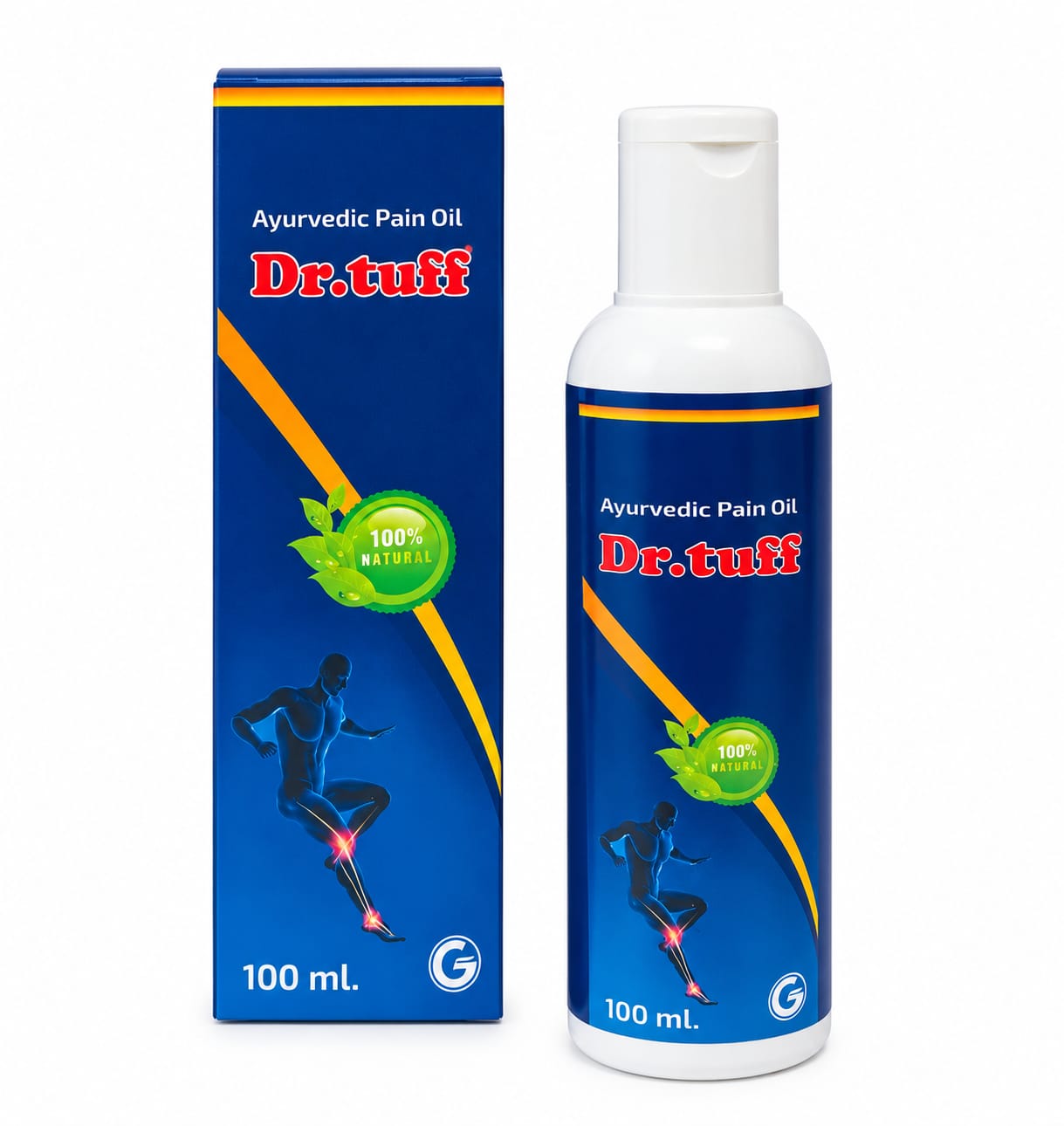 | Ayurvedic Pain Oil Ayurvedic Pain Oil is a 100% natural topical oil for external use for musculoskeletal pain. View product → |
Frequently asked questions
What does the available information confirm about the DR.TUFF formulation?
It does not disclose the complete formulation. The botanical ingredients, plant parts, extraction method, oil quantities, concentration, excipients, fragrance, preservatives and total fill volume remain unconfirmed until you inspect the finished pack.
What should you check before using or recommending DR.TUFF?
Resolve the application method, dose or amount, frequency, intended body area, contraindications, allergy warnings, age limits and instructions for broken or irritated skin from the finished product label or supplier documentation.
How should you compare DR.TUFF with other pain-relief options?
Compare the active ingredients, concentration, dosage form, route of use, evidence, expected benefits, skin or systemic risks and suitability for the specific pain complaint.
Which label and storage details should you verify?
Check the ingredient list, batch number, manufacturing and expiry dates, net contents, manufacturer details, licence information, directions, warnings, storage temperature and packaging seal.
What should a healthcare business request before stocking DR.TUFF?
Request the finished pack artwork, ingredient and specification documents, certificate of analysis, batch details, stability or shelf-life evidence, storage conditions, manufacturing licence information and supply terms.