

Taking a levocetirizine 5 mg tablet safely involves more than recognising its brand name. You need to confirm the pack, use the correct dose for your age and kidney function, account for sedation and interactions, and recognise symptoms that need urgent care rather than self-treatment.
Key takeaways
- Verify levocetirizine 5 mg, batch number, expiry date and seal before taking it.
- Ask a clinician to review dosing for children, older adults, pregnancy or kidney disease.
- Avoid driving until you know whether levocetirizine causes drowsiness or impaired alertness.
- Pharmacies should verify licences, labelling, batch records and storage conditions before stocking it.
How should you check and take a GEECET-5 tablet?
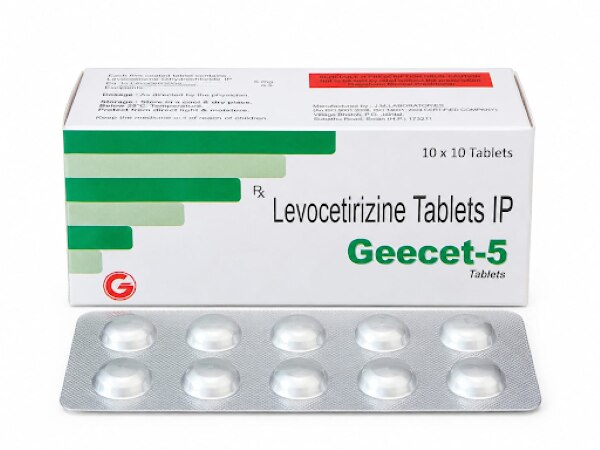
Confirm the GEECET-5 tablet before taking it; the brand name alone does not prove its contents. Check the strip or carton for levocetirizine 5 mg, review any stated salt equivalence, and inspect the batch number, expiry date, intact seal and regulatory labelling for your market.
1. For adults and adolescents aged 12 years and above, take the usual levocetirizine 5 mg dose once daily, commonly in the evening. Do not increase the dose without medical advice; more than 5 mg is unlikely to improve control and increases adverse-effect risk.
2. For how to take levocetirizine, swallow the tablet with water, with or without food. Food can delay absorption and lower the peak concentration without substantially changing total exposure.
3. For a missed dose levocetirizine, take it when you remember unless the next dose is near. If it is near, skip the missed dose and resume your schedule. Never double the dose.
Check the pack again if the tablet looks different, the seal is broken, the expiry date has passed or the labelling is unclear.
Who needs a different dose or medical review?
A 5 mg tablet is not a safe way to give a younger child a required 2.5 mg dose. Do not split or improvise the dose unless the product information specifically permits it.
- Levocetirizine children: US product labelling uses 2.5 mg once daily for ages 6–11 years. Children below 6 require an age-appropriate liquid with paediatric instructions. Follow current local labelling and the clinician’s directions.
- Kidney disease: Levocetirizine is mainly eliminated through the kidneys, so reduced kidney function can increase exposure. Adult labelling may change dosing to 2.5 mg once daily, every other day or every third day as renal function declines. End-stage renal disease or haemodialysis requires specialist advice and is contraindicated in US labelling.
- Levocetirizine elderly: Ask for kidney-function review, particularly before regular use. Also discuss urinary-retention risk and sedating medicines, including sleeping tablets, sedatives and opioid pain medicines.
- Levocetirizine pregnancy: Use the current local product label and obtain a clinician’s risk–benefit assessment rather than assuming the medicine is risk-free.
- Levocetirizine breastfeeding: Follow the same label and clinical review. If treatment is used, watch the breastfed infant for unusual sleepiness or feeding difficulty and seek medical advice if either occurs.
What side effects and interactions affect daily activities?
Somnolence, tiredness, dry mouth and headache are possible levocetirizine side effects. Levocetirizine is less sedating than older antihistamines, but levocetirizine drowsiness can still impair judgement and coordination.
1. Do not drive, cycle in traffic, operate machinery or perform safety-critical work until you know your individual response. Avoid alcohol while assessing it; the levocetirizine alcohol interaction can increase impairment.
2. Ask a clinician or pharmacist before combining it with sleeping tablets, sedatives, opioid pain medicines or another medicine that causes drowsiness. Do not assume a “non-drowsy” label makes every combination safe.
3. Tell a clinician if you have difficulty passing urine. The urinary retention antihistamine risk matters particularly with prostate enlargement, a spinal-cord lesion or another obstructive condition.
4. Seek medical advice for troublesome palpitations, severe weakness, confusion, allergic swelling or any reaction more serious than ordinary drowsiness. Facial, lip, tongue or throat swelling with breathing difficulty requires urgent treatment.
5. After long-term daily use, stopping levocetirizine or cetirizine can rarely cause severe itching. That withdrawal reaction differs from the original allergy returning, so obtain medical guidance before dismissing it or restarting treatment.
How does levocetirizine compare with other antihistamines?
Levocetirizine, cetirizine, loratadine and fexofenadine are second-generation H1-antihistamines, but your response and sedation level can differ.
| Medicine | Usual schedule | Practical point |
|---|---|---|
| Levocetirizine | Once daily | Can cause sleepiness, tiredness or dry mouth; check renal restrictions. |
| Cetirizine | Once daily | Noticeable drowsiness occurs in some users. |
| Loratadine | Once daily | Compare the actual label, interactions and individual response. |
| Fexofenadine | Once daily | Check the label, kidney advice and other medicines before choosing. |
For levocetirizine vs cetirizine, levocetirizine vs loratadine and levocetirizine vs fexofenadine, consider your work demands and medicines rather than relying on a “non-drowsy” claim. Alcohol, sedatives and opioid pain medicines can increase impairment.
All four can reduce sneezing, itching, watery eyes and hives, but they do not remove an allergen or cure an infection. Levocetirizine is not a nasal decongestant. Persistent blocked-nose congestion often responds more directly to an intranasal corticosteroid; oral antihistamines are not a substitute for that congestion treatment.
In chronic urticaria, levocetirizine controls wheals and itching but does not identify the trigger or treat drug reactions, angioedema or systemic disease. Facial or airway swelling, breathing difficulty or circulation symptoms require urgent assessment, not repeated tablets.
When is GEECET-5 the wrong choice for self-treatment?
Do not use GEECET-5 as self-treatment for facial, lip, tongue or throat swelling, breathing difficulty, severe wheezing, faintness or suspected anaphylaxis. An oral antihistamine cannot reverse a dangerous airway reaction.
Call emergency services and follow your emergency action plan for antihistamine anaphylaxis warning signs. Treat a facial swelling emergency as urgent, especially when hives occur with breathing or circulation problems.
Seek medical assessment instead of repeating tablets for:
- High fever with allergy symptoms, severe illness or rapidly worsening symptoms
- Symptoms that do not match a familiar allergy
- Hives with airway swelling, breathlessness, wheezing, dizziness or faintness
Levocetirizine can reduce itching or wheals while leaving the trigger untreated. It does not treat bacterial or viral infection.
Do not keep increasing the dose because symptoms persist. Arrange clinical review to confirm the diagnosis, identify the trigger and choose nasal, skin or emergency treatment when appropriate. When not to take levocetirizine includes situations needing urgent assessment, not merely stronger dosing.
What should a pharmacy or healthcare buyer verify before stocking it?
A pharmacy should treat GEECET-5 pack verification as a document and quality check, not a brand-name decision.
1. Match the active ingredient and strength printed on both the strip and carton. Confirm levocetirizine 5 mg, check the stated salt equivalence, and review excipients for allergy, dietary or formulation concerns.
2. Record the batch number and expiry date, then inspect the seal for damage or tampering. Follow the printed storage instructions, including any temperature and moisture precautions.
3. Confirm that the regulatory labelling matches the market where the medicine will be supplied. Keep the current prescribing information with the stock so staff can answer questions about renal dosing, paediatric formulations, sedation and contraindications.
4. Do not substitute a 5 mg tablet for a child who needs 2.5 mg. These checks also help buyers compare branded formulations and third-party pharma manufacturing partners during pharma procurement India activities.
A pharmaceutical formulation manufacturer such as Genial lifecare can be evaluated against the same evidence: consistent pack details, complete documentation and clear supply-chain controls. This review supports procurement and dispensing decisions; it does not replace a prescriber’s patient-specific assessment.
Related product
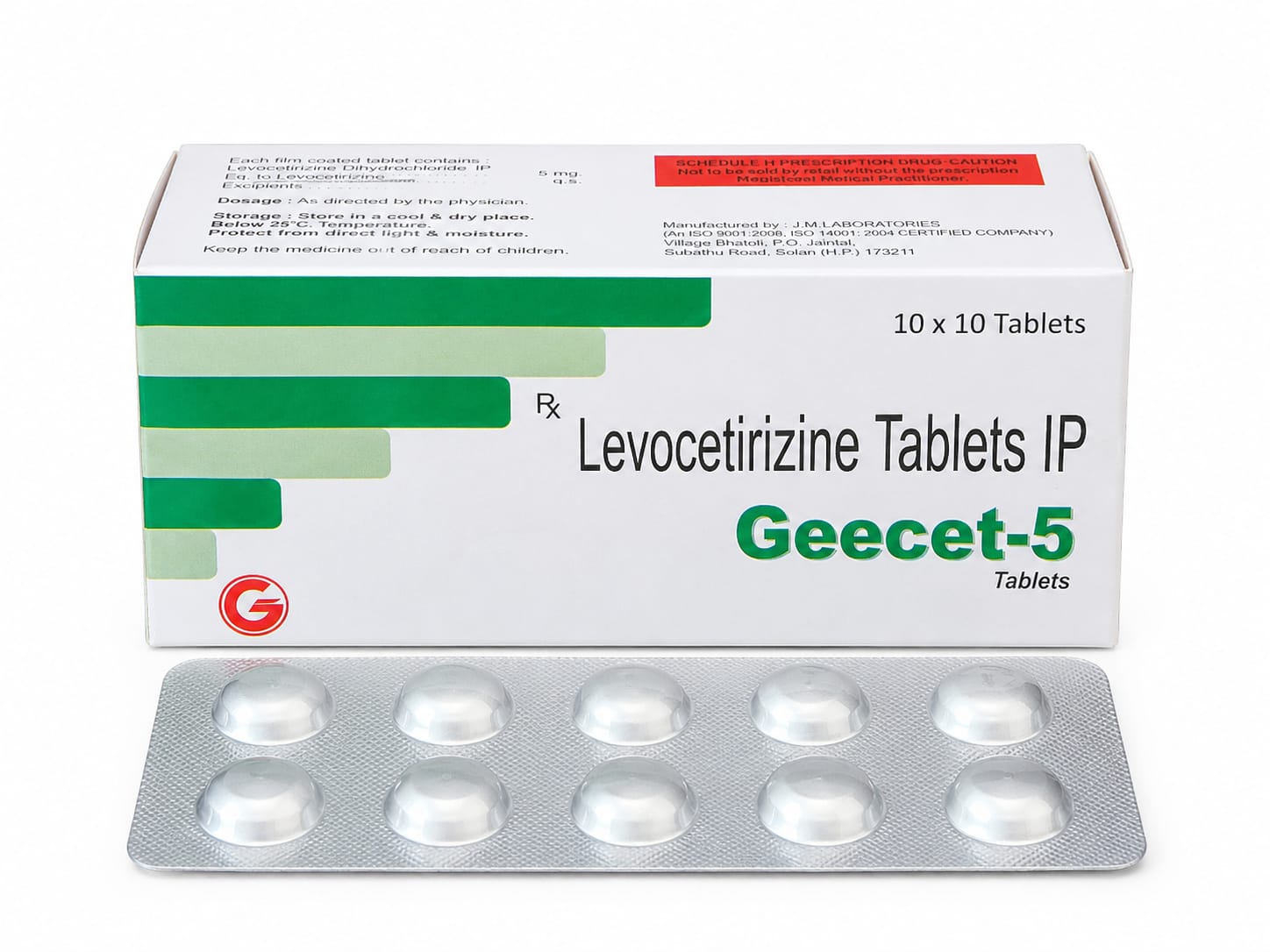 | Anti-Allergic / Antihistamine Geecet-5 is a 3rd generation antihistamine containing Levocetirizine 5mg. View product → |
Frequently asked questions
How should you check and take a GEECET-5 tablet?
Confirm that the strip identifies levocetirizine 5 mg, then check the expiry date, batch number, seal and regulatory labelling. Take it only as directed on the label or by a healthcare professional.
Who needs a different dose or medical review?
Children, older adults, people with reduced kidney function, and people who are pregnant or breastfeeding should obtain medical advice before using levocetirizine.
What side effects and interactions affect daily activities?
Drowsiness, fatigue, headache and dry mouth can affect driving or work requiring alertness. Alcohol and other sedating medicines can increase impairment.
How does levocetirizine compare with other antihistamines?
Levocetirizine is a second-generation antihistamine used mainly for allergy symptoms and hives. Compare medicines by active ingredient, sedation, dosing and your health conditions.
When is GEECET-5 the wrong choice for self-treatment?
Seek medical care for breathing difficulty, facial swelling, severe allergic reactions, persistent symptoms or symptoms that do not fit ordinary allergies.